
LOGUE MEDIA SOLUTION
Project Evidence & Case Study Engine
Turn completed work into structured evidence that helps win the next project by connecting approved project facts, media and outcomes with the Services, Solutions, Industries, Locations, people and buyer pathways they genuinely support.
AI-Generated Conceptual Visual — Not Documentary Evidence
Home » Solution Projects »
Last Updated: 12 September 2026
DIRECT ANSWER
What Is the Project Evidence & Case Study Engine?
The Project Evidence & Case Study Engine turns completed work into structured, reusable proof connected to the Services, Solutions, Industries, Locations, people, media and outcomes each project genuinely supports.
PROJECT
Evidence Record
Project Facts · Media · Services · Solutions · Industries · Locations · People · Outcomes
For buyers
It makes relevant delivery proof easier to understand close to the capability or decision it supports.
For sales and marketing
It reduces the need to rebuild the same project story from scattered facts and media each time.
For Search and AI
It creates clearer relationships between a project, the work delivered and the pages or entities that evidence genuinely supports.
Work Finishes. The Evidence Often Does Not Travel.
↯ EVIDENCE EXISTS — BUT THE CONNECTIONS ARE BROKEN
01
Project facts
Useful facts can remain in project files, inboxes or staff memory after handover. Once that context disperses, later teams have to reconstruct the story instead of drawing from a reliable source.
02
Media loses context
Photos and video can become decoration when the service, location, people, approvals and outcome context are not preserved with them.
03
Service claims stay abstract
Capability pages can remain generic even though completed work already exists that could support the claim. The result is a weaker proof story even when the business has already delivered the capability in practice.
04
Customer evidence separates
Testimonials, approvals and customer statements can become disconnected from the project they substantiate. That separation makes otherwise useful evidence harder to attribute and reuse confidently.
05
Relationships disappear
Services, Industries, Locations, people and technologies are harder to connect when there is no authoritative Project Record. The relationships then have to be recreated manually instead of remaining visible and traceable.
06
Reuse becomes manual
Sales and marketing teams repeatedly reconstruct evidence instead of drawing from one governed source. Time is spent rebuilding proof rather than using it consistently across buyer conversations.
Evidence Debt Grows After Handover
AT HANDOVER
Useful evidence still has context.
█████
↓
AS CONTEXT IS LOST
The evidence becomes harder to recover, prove and reuse.
01
Facts fade
Project detail becomes harder to recover as staff move on and the delivery context becomes less immediate.
02
Proof fragments
Media, testimonials and technical facts are stored separately and lose their relationship.
03
Sales rebuilds
People spend time recreating proof for proposals and buyer conversations.
04
Claims remain generic
Strong delivery experience is harder to demonstrate on Service, Industry and Location pages.
05
Knowledge leaves
Practical project knowledge can disappear when the people who remember it are no longer available.
SOLUTION TRANSFORMATION
Create One Authoritative Project Record
Bring scattered Project facts, approved media and context into one governed source before that evidence is reused across buyer pathways.
One governed source
Bring approved project facts, media, relationships and publication status into one structured record. This gives sales, marketing and Search/AI content one traceable source instead of several disconnected versions of the same project.
Connect only what is true
Link the project only to the Services, Solutions, Industries, Locations, people and technologies it genuinely supports. Evidence-led relationships strengthen relevance without manufacturing capability, sector or location claims.
Reuse without rewriting the truth
Adapt verified excerpts and approved media for the buyer pathways where the project is genuinely relevant. Each reuse remains traceable to the same Project Record, reducing duplication and claim drift over time.
What Belongs in a Project Record
PROJECT
AUTHORITATIVE
RECORD
One controlled evidence source
Facts · Relationships · Media · Permissions · Outcomes
- Project Identity
- Services & Solutions
- Industry & Location
- People & Technology
- Media & Permissions
- Customer & Outcomes
Project identity
Record what the project was, who it was for and the approved context in which it was delivered. Preserve enough verified detail to distinguish the work from a generic capability claim.
Services and Solutions
Identify the Services and Solutions the completed work genuinely demonstrates. These links should be evidence-led so the project strengthens capability claims without overstating what was actually delivered.
Industry and Location
Record the relevant Industry and Location context when it is supported by the project facts. This allows the same evidence to support market and geographic relevance without manufacturing local or sector claims.
People and Technology
Identify the people, systems, products or technologies materially connected to delivery. These relationships add practical context and help explain how the work was actually performed.
Media and permissions
Store approved images, video, drawings and other assets together with their publication status and usage context. Keeping media connected to the Project Record prevents visual evidence from becoming detached from the facts it is meant to support.
Customer and outcome evidence
Preserve approved testimonials, customer statements and supported outcome context without extending beyond what can be evidenced. These assets provide stronger proof when their source and scope remain connected to the Project Record.
EVIDENCE TYPES
Four Evidence Types Worth Preserving
Desktop uses the approved flip treatment. Mobile remains the approved static Blurb so all content is immediately visible.
Project Facts
Hover or focus to view details
Project Facts
Record what was delivered, for whom, in what context and through which approved Services or Solution components. Preserve enough verified detail to explain the scope of the work and distinguish the project from a generic capability claim. These facts become the foundation for every later reuse of the evidence.
Visual Evidence
Hover or focus to view details
Visual Evidence
Preserve approved photography, video, screenshots, drawings or other media that shows the work without presenting illustrative imagery as documentary proof. Keep each asset connected to the project context, permissions and publication status. This allows visual evidence to be reused without losing what it actually proves.

Customer Evidence
Hover or focus to view details
Customer Evidence
Preserve approved testimonials, reviews or customer statements with their source and scope kept clear. The value comes from showing what the customer actually confirmed, not from expanding the statement into a broader marketing claim. Keeping it connected to the Project Record strengthens attribution and trust.
Outcome Context
Hover or focus to view details
Outcome Context
Record supported outcome information that explains what changed, improved or was delivered without inventing a result that cannot be verified. Where quantified results are unavailable, use factual outcome context rather than unsupported performance claims. This keeps the evidence commercially useful and defensible.
CONTROLLED PROCESS
Capture → Verify → Classify → Connect → Publish → Reuse
The Project Record remains the stable source while the evidence progresses through six controlled stages.
STABLE SOURCE
AUTHORITATIVE PROJECT RECORD
Verified facts, relationships, media, permissions and supported outcome context remain controlled while the public treatment changes.
01
CAPTURE
Capture
Collect useful facts, media, testimonials and project knowledge while the delivery context is still available. Capturing the source material early reduces later reconstruction and prevents important evidence from being lost.
Verify
Confirm what was delivered, what may be published and which claims can actually be supported. Verification establishes the boundary between usable evidence and material that must remain unpublished or qualified.
02
VERIFY
03
CLASSIFY
Classify
Identify the genuine Service, Solution, Industry, Location, people and technology relationships. Classification makes the evidence reusable without creating false or weak connections.
Connect
Link the evidence to the buyer pathways and entities it legitimately strengthens. The connection should help a buyer understand why the project is relevant in that specific context.
04
CONNECT
05
PUBLISH
Publish
Choose the appropriate public form: Project page, excerpt, image, video, case study or another approved treatment. The publication format should match the strength of the available evidence and the buyer question being answered.
Reuse
Draw from the authoritative record without cloning the full project story across multiple pages. Reuse should remain context-specific while every version stays traceable to the same verified source.
06
REUSE
Connect Each Project Only Where It Belongs
Capability
Connect the project to the Services and Solutions the completed work genuinely demonstrates. This turns broad capability claims into evidence-backed proof without creating unsupported associations.
Market context
Associate the project with the relevant Industry only when the work supports that relationship. This helps buyers see sector experience while preserving evidence integrity.
Location
Use geographic context only where it is supported by the project facts. This allows legitimate local evidence to strengthen Location pages without manufacturing place-based relevance.
PROJECT RECORD
Connect Each Project Only Where It Belongs
↙ ← ● → ↘
One verified source at the centre of the evidence network.
People and technology
Connect the people, products, systems or technologies materially involved in delivery. These relationships add practical evidence about how the project was executed and what capabilities contributed.
Buyer pathway
Reuse concise evidence where it answers a real buyer question. The excerpt should explain relevance in that context rather than repeat the entire Project story.
Authoritative source
Keep every reuse path traceable to the same verified Project Record. This preserves consistency across pages, proposals and media while reducing the risk of claims drifting over time.
✓ VERIFICATION CHECKPOINT
Verify Before Promotion
Are the basic project facts verified?
Confirm what was delivered, the project context, relevant Services, people and location before writing promotional narrative around it.
ONE SOURCE → MULTIPLE VALID USES
Reuse One Record Across the Right Buyer Pathways
The branching model below shows how one verified Project Record can support different buyer contexts without becoming six separate versions of the truth.
1
VERIFIED PROJECT RECORD
Controlled facts · approved media · genuine relationships · publication status
↙ ↓ ↘
01
Detailed Project Story
Publish a full Project page only when the project has enough independent value, useful detail and evidence to justify its own URL. The page should contribute information that cannot be supplied adequately by a generic Service or Industry page.
02
Service Evidence
Use a concise project excerpt where it substantiates a specific Service capability. Explain exactly what aspect of the completed work supports that Service claim while keeping it traceable to the Project Record.
03
Industry Evidence
Show relevant completed work in the Industry context it genuinely supports. The evidence should help a buyer understand sector experience without implying broader expertise than the project can prove.
04
Location Evidence
Use location-specific proof only when the project actually occurred in or materially supports that geographic context. This can strengthen local relevance only where the place relationship is genuine.
05
Sales & Proposals
Reuse verified project facts and approved media in proposals, capability material and sales conversations. This shortens preparation time while keeping claims aligned with the same governed source.
06
Media Repurposing
Use VDRS where approved project video, interviews or recorded material can become additional evidence and content assets. The source material remains attributable while its value is extended across formats.
! EVIDENCE REQUIRED
Documentary project evidence required
No client, project, location, testimonial or outcome imagery is substituted here. Add only attributable, approved evidence.
See Project Evidence in Practice
Evidence-gated Project area
Named Project examples are published only after the authoritative Project selection, facts, media and permissions have been verified.
What this section will show
Featured Projects should make the completed work, context and relevant capability visible without fabricating missing outcomes.
VERIFIED PROJECT EVIDENCE ONLY
Project photography, testimonials and outcome evidence are shown only where the source, permissions and relationship to the completed work can be verified.
AUTHORITY FLOW
Make Every Project Page Worth Finding
Project evidence should create information gain and clearer relationships, not simply add another thin URL.
BUYER QUESTIONS
Frequently Asked Questions
What is the Project Evidence & Case Study Engine?
It is a structured way to capture completed-work facts, media, testimonials and outcome context, then connect that approved evidence with the Services, Solutions, Industries, Locations and buyer pathways it genuinely supports.
What information belongs in a Project Record?
A Project Record should contain the approved project identity and context, the Services and Solutions demonstrated, relevant Industry and Location context, materially connected people and technologies, approved media and permissions, and supported customer or outcome evidence.
Can existing completed projects be converted into Project Evidence?
Yes, where enough reliable facts, media and permissions can still be verified. The first step is to recover and confirm the source material before deciding whether the project warrants a standalone page or another evidence treatment.
How is Project Evidence verified before publication?
Confirm what was delivered, what may be published, the relevant Service, Solution, Industry, Location, people and technology relationships, and which claims are actually supported before promotional narrative is created.
Can one project support several pages?
Yes. One authoritative Project Record can provide different concise excerpts for relevant Service, Industry, Location or Solution pages while the underlying facts remain consistent and traceable to the same source.
How do you avoid duplicate case-study content?
Keep one authoritative Project Record and create context-specific summaries rather than cloning the full project story across several pages.
What happens when Project Evidence is incomplete?
Do not fill the gap with invented facts, outcomes or documentary imagery. Keep the Project evidence-gated until the missing facts, media, permissions or claims can be verified, or use a more limited evidence treatment that only contains supported information.
How can Project Evidence support Search and AI visibility?
Structured, page-specific Project evidence can make the relationship between completed work, capabilities, industries, locations and other entities clearer. It supports interpretation and retrieval, but it does not guarantee rankings, AI citations or recommendations.
RELATED SOLUTIONS
Continue Through the Solutions Architecture
Use the approved Related Pages software to surface only eligible, genuine Solution pages.

AI Search Visibility & Readiness System
Google and AI systems understand, retrieve and trust your business.
View AI Search Visibility & Readiness System →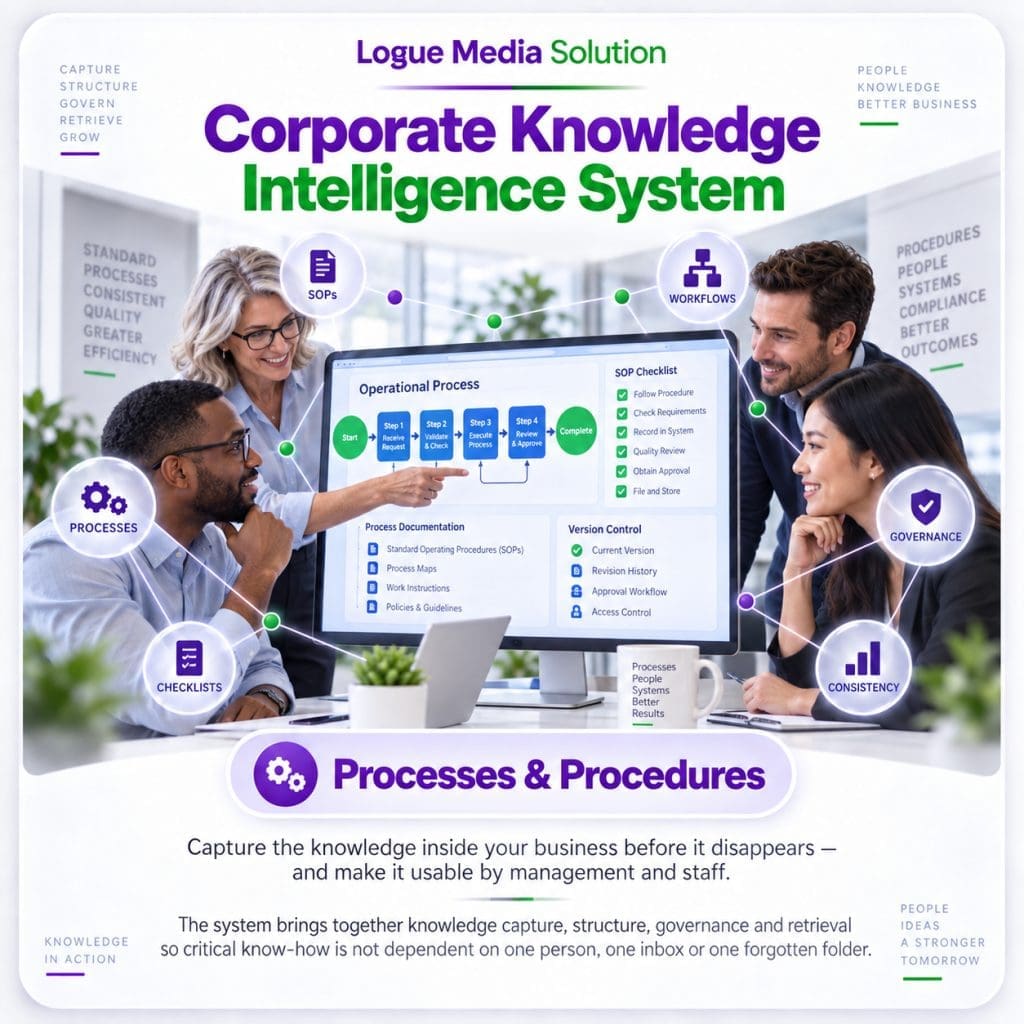
Corporate Knowledge Intelligence System
Capture, structure and govern critical business knowledge so management and staff can find, reuse and preserve it before expertise disappears.
View Corporate Knowledge Intelligence System →NEXT STEP
Start With One Completed Project
Choose one completed project with useful facts, media or customer evidence. Start by verifying what was delivered and what may be published, then build the Project Record before deciding how it should be reused.